- What is frontal fibrosing alopecia (FFA)?
- Causes of frontal fibrosing alopecia (FFA)
- Treatment for frontal fibrosing alopecia (FFA)
What is frontal fibrosing alopecia (FFA)?
Frontal fibrosing alopecia (FFA) is a poorly-understood form of hair loss around the hairline that has received growing, though still limited, recognition over the last few decades. Typically described as a form of inflammatory, scarring alopecia, the typical pattern seems to follow my own experience, which started in my mid forties:
- The almost-but-not-quite-total disappearance of eyebrows (known as madarosis)
- Disappearance of the hair of arms and legs (symptom-less)
- The gradual recession of the hairline (frontotemporal alopecia), not always evenly, accompanied by itchy, inflamed follicles (facial papules).
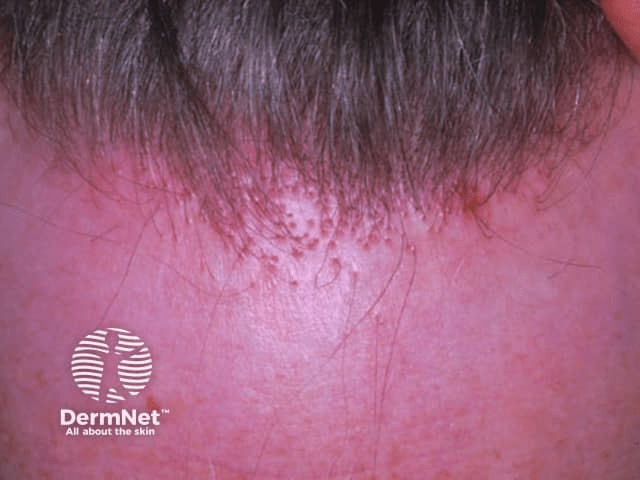
Unlike some other forms of alopecia, it seems that the hair does not grow back – so early diagnosis and intervention is vital to limiting its impact.
Causes of frontal fibrosing alopecia (FFA)
We do not know.
You only have to skim through the academic papers on FFA to see that we are still a long way from understanding the causes of frontal fibrosing alopecia. Sunscreen, hormones, thyroid issues: all have been suggested. Not knowing the cause, of course, makes figuring out the best prevention and treatment all the more tricky.
One of the drawbacks of academic studies is that the sample sizes are often small, making it hard to draw statistically significant conclusions about what is a worldwide condition. One of the aims of this project is to conduct a global piece of research across all sufferers of FFA that we can continue to refine as time goes on – one that will prove of value to the medical establishment, but also to ourselves in terms of understanding our bodies and environment.
If you’d like to be kept up to date with this research plan, please subscribe below.
Treatment for frontal fibrosing alopecia (FFA)
Just as we don’t know the cause of frontal fibrosing alopecia, there is also no definitive guide as to the best treatment. Research suggests that inflammation and hair loss on around the hairline may be managed by treatments such as minoxidil (for the hair loss) and lymecyclin (an acne treatment) for the inflammation. A range of other options are noted in dermatological academic papers.
In my own case, I was prescribed Clobetasol, a topical steroid that came as a liquid in a bottle that had to be squeezed onto the hairline for a period of time. Application was a messy and unsatisfactory business. It possibly helped the inflammation, but I believe that the longer term fix was moving to a mineral sunscreen instead of a ‘normal’ one and avoiding the moisturisers with a built-in SPF that I had been using for many years.
One of the aims of this LostEyebrows project is to connect with other sufferers and share information about other treatment options. If you would like to be involved in this project, please leave your email below.
 LostEyebrows.org